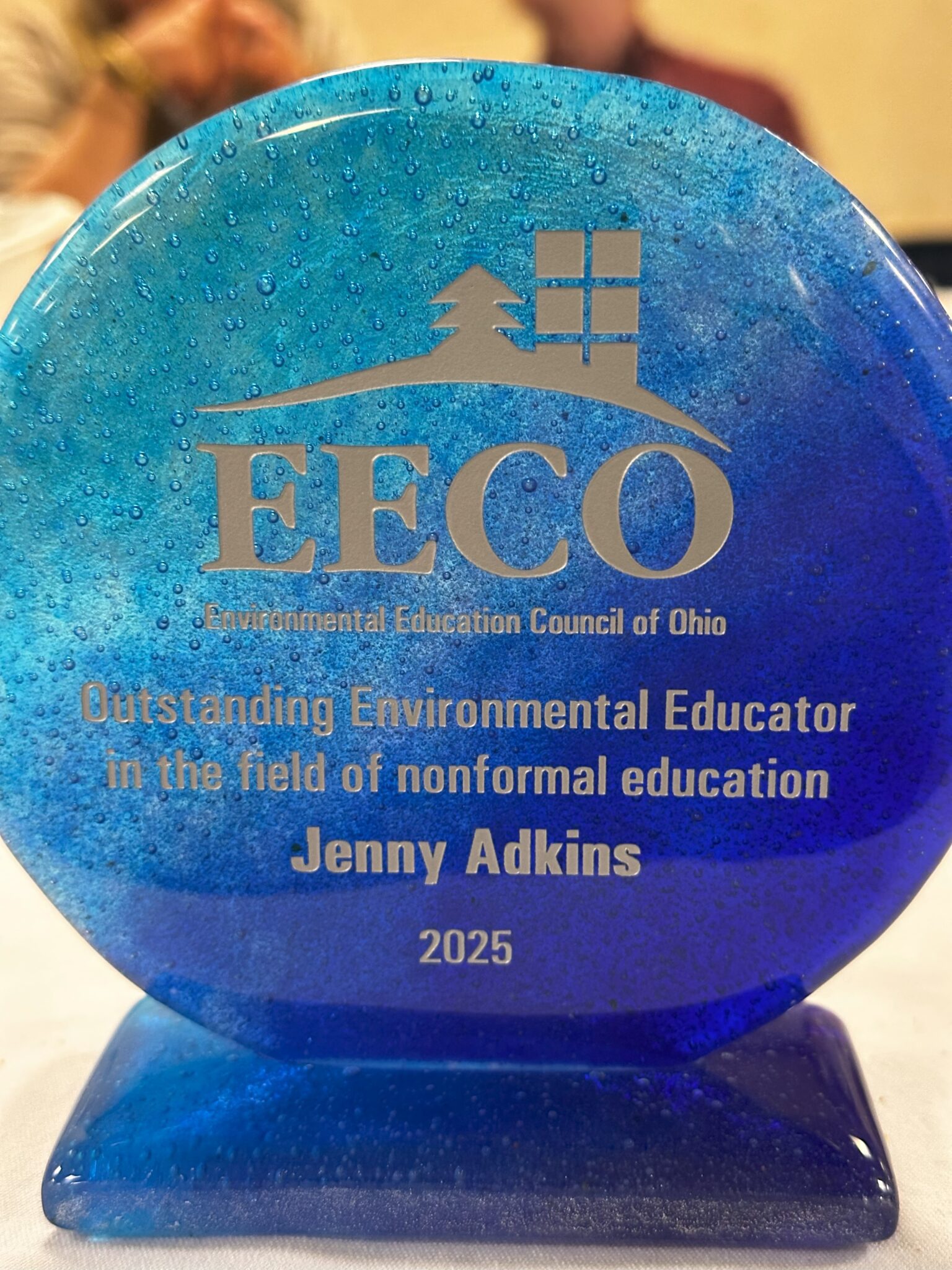
Jenny Wins Environmental Education Award through EECO!
April 8, 2025
Welcome Ellen!
September 30, 2025
By Jenna Roller-Knapp
Time flies when you’re a mayfly! Mayflies are one of oldest groups of insects, estimated to have evolved between 280-300 million years ago! As such, species in the Ephemeroptera family display many unique morphological differences and life stage strategies.
There are around 4,000 mayfly species globally and an estimated 660 mayfly species in North America (although DNA analysis suggest there may be hundreds more). It takes a skilled eye to identify species (adult or larval phase), trained hand to time the collection specimens, and an adept mind to arrange access to sampling sites. These all pose challenges for tracking species diversity and changes over time. Interestingly, North Carolina may be a hotspot of mayfly diversity.
The mayfly lifecycle consists of an egg (not always), nymph, and two adult stages known as the subimago (dun) and imago (spinner). They spend the majority of their life as larva, which depending on the species can live multiple years before morphing to adults. Generation time varies from species to species and is also impacted by climate. Adults may live for hours to weeks depending on the species. Because their adult phase is fleeting geared towards mating, many have no mouthparts or digestive tracts, which gives them extra abdominal room for eggs. Most mayflies lay eggs, but some deposit live young. Some are able to reproduce asexually!
Mayflies are a highly sought food source because they have the highest protein content (by dry weight) of any edible insect! They are also very abundant for a short period of time, especially near the great lakes with stories of the adults needing to be shoveled away under light sources after their brief lie. They are a very important part of the food web.
Given the mass “hatching” events that occur, it may appear that mayfly populations are thriving. However, mayfly (and overall insect) populations have been decreasing. Main detrimental factors include:
- Pesticides like neonicotinoids, which are causing widespread decline of insects around the world.
- Light pollution and artificial surfaces, which disrupt natural behaviors. For example, Mayflies have been observed unsuccessfully ovipositing on solar panels and roads, due to them mimicking water surfaces. This decreases populations because their attempts of reproduction are unsuccessful.
- Climate change, which is a large factor as well but likely affects tropical species more than temperate areas with greater temperature fluctuations.
Reducing or eliminating pesticides from personal lawn care and purchasing plants that are neonicotinoid-free can go a long way in terms of helping insects. Advocating for city-wide bans on pesticide sprays is also important. Many are advertised as targeting pests like mosquitos, but they also negatively impact other insect species. Supporting policy (and personal practices) for clean and healthy waterways like streams, wetlands, and lakes, ensures you are helping mayflies (and other aquatic beings), as well as species up the food chain that rely on their existence.
For those of you intersted in learning more about larval mayfly identification (and other macroinvertebrates) we encourage you to puruse this site.
This blog’s inspiration came from an in person presentation and workshop at Ohio EPA given by Luke Jacobus from Indiana University on May 27, 2024.